Minggu, 28 Oktober 2012

[J808.Ebook] Ebook Free A Disease Called Childhood: Why ADHD Became an American Epidemic, by Marilyn Wedge

Ebook Free A Disease Called Childhood: Why ADHD Became an American Epidemic, by Marilyn Wedge

Spend your time even for just couple of minutes to check out a publication A Disease Called Childhood: Why ADHD Became An American Epidemic, By Marilyn Wedge Reviewing a book will certainly never ever minimize as well as squander your time to be ineffective. Checking out, for some individuals come to be a requirement that is to do daily such as investing time for eating. Now, what regarding you? Do you like to check out a publication? Now, we will show you a brand-new book qualified A Disease Called Childhood: Why ADHD Became An American Epidemic, By Marilyn Wedge that could be a brand-new means to explore the understanding. When reading this e-book, you could obtain one point to consistently bear in mind in every reading time, also pointer by step.
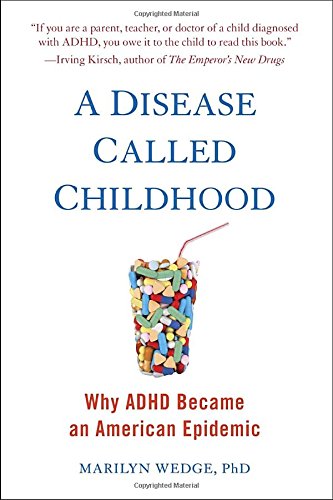
A Disease Called Childhood: Why ADHD Became an American Epidemic, by Marilyn Wedge

A Disease Called Childhood: Why ADHD Became an American Epidemic, by Marilyn Wedge


A Disease Called Childhood: Why ADHD Became an American Epidemic, by Marilyn Wedge

Ebook Free A Disease Called Childhood: Why ADHD Became an American Epidemic, by Marilyn Wedge

Exactly how if your day is started by reading a book A Disease Called Childhood: Why ADHD Became An American Epidemic, By Marilyn Wedge Yet, it remains in your device? Everybody will constantly touch and us their gizmo when awakening as well as in early morning activities. This is why, we mean you to likewise review a publication A Disease Called Childhood: Why ADHD Became An American Epidemic, By Marilyn Wedge If you still perplexed how to get the book for your gizmo, you can comply with the means here. As right here, we provide A Disease Called Childhood: Why ADHD Became An American Epidemic, By Marilyn Wedge in this site.

If you obtain the published book A Disease Called Childhood: Why ADHD Became An American Epidemic, By Marilyn Wedge in on the internet book shop, you could likewise discover the exact same issue. So, you need to move store to store A Disease Called Childhood: Why ADHD Became An American Epidemic, By Marilyn Wedge and also search for the available there. But, it will certainly not happen below. The book A Disease Called Childhood: Why ADHD Became An American Epidemic, By Marilyn Wedge that we will certainly offer right here is the soft data principle. This is exactly what make you could quickly discover and get this A Disease Called Childhood: Why ADHD Became An American Epidemic, By Marilyn Wedge by reading this site. We offer you A Disease Called Childhood: Why ADHD Became An American Epidemic, By Marilyn Wedge the very best product, constantly and also constantly.

Never ever question with our offer, considering that we will certainly always offer exactly what you require. As such as this updated book A Disease Called Childhood: Why ADHD Became An American Epidemic, By Marilyn Wedge, you could not discover in the various other location. But here, it's quite simple. Just click as well as download, you could have the A Disease Called Childhood: Why ADHD Became An American Epidemic, By Marilyn Wedge When convenience will ease your life, why should take the complex one? You could purchase the soft documents of the book A Disease Called Childhood: Why ADHD Became An American Epidemic, By Marilyn Wedge right here and be member of us. Besides this book A Disease Called Childhood: Why ADHD Became An American Epidemic, By Marilyn Wedge, you could also locate hundreds listings of guides from several sources, compilations, publishers, and authors in around the globe.

By clicking the link that we offer, you can take the book A Disease Called Childhood: Why ADHD Became An American Epidemic, By Marilyn Wedge completely. Attach to net, download, and conserve to your device. Exactly what else to ask? Checking out can be so very easy when you have the soft data of this A Disease Called Childhood: Why ADHD Became An American Epidemic, By Marilyn Wedge in your gadget. You can likewise replicate the file A Disease Called Childhood: Why ADHD Became An American Epidemic, By Marilyn Wedge to your office computer or in the house as well as in your laptop computer. Just share this excellent information to others. Recommend them to see this resource and get their searched for books A Disease Called Childhood: Why ADHD Became An American Epidemic, By Marilyn Wedge.

A Disease Called Childhood: Why ADHD Became an American Epidemic, by Marilyn Wedge

A family therapist offers a surprising new look at the rise of ADHD in America, arguing for a better paradigm for diagnosing and treating our children.
 
Since 1987, the number of American children diagnosed with ADHD has jumped from 3 to 11 percent. Meanwhile, ADHD rates remain relatively low in other countries such as France, Finland, the UK, and Japan, where the number of children diagnosed with and medicated for ADHD is 1 percent or less. Alarmed by this trend, family therapist Marilyn Wedge set out to understand how ADHD became an American epidemic—and to find out whether there are alternative treatments to powerful prescription drugs.
 
In A Disease Called Childhood, Wedge examines the factors that have created a generation addicted to stimulant drugs. Instead of focusing only on treating symptoms, she looks at the various potential causes of hyperactivity and inattention in children, and behavioral and environmental—as opposed to strictly biological—treatments that have been proven to help. In the process, Wedge offers a new paradigm for child mental health—and a better, happier, and less medicated future for American children.

  • Sales Rank: #173756 in Books
  • Brand: Wedge Marilyn
  • Published on: 2016-03-15
  • Released on: 2016-03-15
  • Original language: English
  • Number of items: 1
  • Dimensions: 8.30" h x .70" w x 5.70" l, .0 pounds
  • Binding: Paperback
  • 272 pages
Features
  • A Disease Called Childhood Why ADHD Became an American Epidemic

Review
“This reflective, carefully researched and well-written book exposes the cultural wounding of our children by Big Pharma and ill-advised adults. Wedge's book is a much needed call to action for advocates of children everywhere.”
—Mary Pipher, bestselling author of Reviving Ophelia and The Green Boat
 
"One of the most important and persuasive books I've read in years. If you are a parent, teacher, or doctor of a child diagnosed with ADHD, you owe it to the child to read this book."
—Irving Kirsch, author of The Emporer's New Drugs: Exploding the Antidepressant Myth

"In this ocmpelling book, Marilyn Wedge provides readers with an in-depth understanding of the rise of ADHD, a skillful deconstruction of the science used to promote the selling of stimulants for the disorder, and--most important of all--a guide for thinking of alternative approaches to helping our children. This is an antidote to the common wisdom about ADHD that our society needs to know."
—Robert Whitaker, author of Anatomy of an Epidemic: Magic Bullets, Psychiatric Drugs, and the Astonishing Rise of Mental Illness in America

“A Disease Called Childhood is strongly recommended for parents who wish to understand  the ADHD diagnosis and  learn specific techniques that may be helpful for their children.”
—Stuart Kaplan, M. D., Clinical Professor of Psychiatry at Penn State College of Medicine and author of Your Child Does not Have Bipolar Disorder
 
“A Disease Called Childhood is a very readable analysis of the hoax that American psychiatry and Big Pharma have perpetrated for the past 40 years to redefine children’s normal behaviors as some form of brain disease. Marilyn Wedge has written a proper antidote to this unnecessary medicalization, by encouraging us to re-examine the quality of the family, school, and social environments that we provide for our children.”
—Stuart A. Kirk, Distinguished Professor Emeritus, Luskin School of Public Affairs, UCLA, author of The Selling of DSM, Making Us Crazy, and Mad Science

"[Wedge's] affable approach and compassionate universal concern for the wellness of  children are evident throughout. In an important read for open-minded parents, Wedge offers fresh perspectives and practical approaches to the continuing ADHD conundrum."
—Kirkus Reviews

"It's one of those parenting books that I just wanted to jump on the roof and shout about because it's really that good. It's not just for parents who are at the end of the road with schools wanting a psychiatric diagnosis for the behaviour of their children, it's also a roadmap on how to not end up there in the future."
—Blogher

About the Author
Marilyn Wedge is a practicing family therapist with a Ph.D. in social psychology from the University of Chicago, where she received a grant from the prestigious Danforth Foundation. She was a postdoctoral fellow in ethics at the Hastings Center, a nonprofit institution dedicated to bioethics. Wedge is the author of Suffer the Children: The Case Against Labeling and Medicating and an Effective Alternative, which was published in paperback with the title Pills Are Not for Preschoolers: A Drug-Free Approach for Troubled Kids.

Excerpt. © Reprinted by permission. All rights reserved.

AUTHOR’S NOTE

In order to uphold therapist-client confidentiality, I have changed the names and identifying features of the clients mentioned in this book. The processes and outcomes of the therapy sessions are real. Family therapy relies for its integrity on the accuracy of case studies. The people and conversations I relate are composites that I have adapted conceptually from a number of individual cases from my twenty-five years of practice. Any resemblance of the composite characters or therapies to any actual person is entirely coincidental.

INTRODUCTION

A Season in Childhood

In 1988, when I started my practice as a child therapist, I had barely heard of attention-deficit/hyperactivity disorder, or what is typically called ADHD. The diagnosis had arrived on the scene a year earlier, in the third revised edition of the Diagnostic and Statistical Manual of Mental Disorders (DSM-III-R), the book doctors use to diagnose mental disorders in children and adults. Previous iterations of the manual had identified various types of hyperactivity and attention problems in children, including attention deficit disorder (ADD), the precursor to ADHD, in 1980. But this was the first time the term ADHD as we know it today appeared. According to the DSM, to warrant a diagnosis of ADHD, a child had to exhibit eight symptoms of hyperactivity, inattentiveness, or impulsivity (from a checklist of fourteen) for at least six months. The checklist included things such as “is easily distracted” or “often interrupts” or “intrudes on others.”

Despite its codification in the DSM, at the time ADHD was not widely discussed among child therapists, let alone parents, teachers, and pediatricians, as it is today. Psychoanalytically minded child therapists (those inspired by the work of Sigmund Freud) saw children’s problems as the expression of inner conflicts, while family systems therapists like me considered kids’ problems responses to stressful situations in their social context: at home, at school, or with their friends. We saw no reason to formalize a diagnosis for behavior that child therapists had been successfully treating for years. So we ignored it.

For a while, that was fine. From the time I started my practice until the middle of the 1990s, not one mother or father ever asked me if I thought their child had ADD or ADHD. If their child’s behavior changed, parents assumed something was worrying or stressing their child. They came to me to discover the source of stress.

From my point of view, behavioral problems such as aggression, disobedience, or other behaviors commonly associated with ADHD, such as inattention and hyperactivity, are signs that something is wrong in a child’s life—either extreme trauma, like abuse or poverty, or something more typical, like a lack of discipline or a difficult family transition. Children are not fully developed mentally or behaviorally. Negative emotions that arise from lack of structure or difficult circumstances in their environments usually manifest themselves in their behavior, since children are not equipped to express themselves directly. I was used to treating children’s symptoms as responses to rough patches in their family life or troubled relationships with friends or at school. I helped children cope with sadness or anxiety, compulsive behaviors or aggressiveness, inattentiveness at school or moodiness at home by discovering the cause of the child’s distress.

Of course, I saw plenty of children who were jumpy, disruptive, fidgety, oppositional, or uninterested in school. In these cases, parents generally came to me to ask if I could help them keep the behavior in check, sometimes after a teacher had complained that a child was interrupting class or refusing to do assignments. I typically came up with behavioral solutions for these kids. I advised parents to create a solid plan for discipline, to stay calm, not to yell, to give their child time to mature, to reward good behavior, to invoke consequences for mischief, and so forth. At times, I attended a meeting at the child’s school and worked with the child’s parents, teacher, and school counselor to find specific ways to help the child in the classroom. For particularly active kids—more often boys than girls—I recommended that parents enroll them in a sport or encourage them to ride their bikes as an outlet for their extra energy. Even in cases where something specific—such as divorce, a parent’s injury or illness, or another disruption in the child’s life—was causing the distress, I could usually work with parents and children to address the problem, talk to the child, and figure out a way for them to move past it. These techniques usually worked.

Not every misbehavior was rooted in a troubling situation at home. In those days, some degree of naughtiness and wildness was tolerated and even expected in children, especially in boys. If parents had a little Dennis the Menace at home, well, that was just boys being boys. Impulsive, distractible kids who occasionally rebelled against the authority of adults were considered naughty but normal. Nobody would have suggested that Dennis the Menace or Beaver Cleaver had a mental disorder that required medication. Nobody would have suggested that Huck Finn’s chronic truancy was the sign of a mental illness. A teaspoon of discipline, not a dose of psychiatric medication, was the cure for naughty children. Most people thought the only “disease” that afflicted kids like that was called childhood.

Toward the end of the 1990s, I began to see changes in my practice. More children were coming in to be evaluated for ADHD, often on the recommendation of their teachers. Around 2000, a worried father brought his six-year-old son, Liam, to see me after the boy’s teacher said he wasn’t keeping up with the rest of his class. The teacher worried that even though Liam was bright, he was falling behind. Liam’s father was an epidemiologist with a medical degree from UCLA. He told me in a grim voice that he thought his son had ADHD. I was struck by the fact that he seemed to think of ADHD as a disease that needed to be treated—something you have rather than a series of symptoms you exhibit. But I couldn’t blame him. The number of children who were being diagnosed with ADHD was skyrocketing. By 2000, approximately 7 percent of children in the United States had the diagnosis, up from 3 percent in 1987. By 2014, the number was 11 percent for children and 15 percent for high school kids. It did seem like an epidemic.

Liam wasn’t fidgety or squirmy, but he had trouble focusing and finishing his schoolwork. Sometimes he’d forget to bring home his backpack and would miss several homework assignments. I discovered that Liam was one of the youngest children in his first-grade class. Some of his classmates were already seven, whereas Liam had turned six just before he started first grade. Perhaps, I thought, he simply lacked the maturity to keep up with his classmates in the fast-paced, academically oriented elementary school he attended.

I recommended that Liam’s mother and father take turns sitting down with him in the evening while he did his homework and offer him help when he needed it. I suggested they keep the television turned off during homework time so that the noise wouldn’t distract him. The parents also made an arrangement with Liam’s teacher to contact her by e-mail if Liam forgot to bring home his backpack. The teacher would then e-mail them the homework assignment for that day so Liam wouldn’t fall behind. With the extra support and attention, Liam soon caught up with the other students.

Fortunately, we were able to resolve Liam’s school problems without referring him to a doctor for medication. However, the epidemic continued to grow for many children. By 2010, Centers for Disease Control and Prevention data indicated that more than ten million American children and teens had been diagnosed with ADHD in doctors’ offices. Medication became the go-to solution for kids who were hard to control or struggled at school. Doctors typically prescribed psychostimulant medications such as Ritalin and Adderall to help kids sit still and focus. These medications were not new in the medical arsenal—stimulants had been used to treat nasal congestion, obesity, and mild depression since the 1930s, but they had been newly positioned for children. By 2012, almost twenty-one million prescriptions for Ritalin and Adderall were being dispensed for children each year, up from fewer than three million prescriptions in 1990.

The drugs also became the catalyst for a radical change in the culture of American parenting. Parents came to believe that in an increasingly competitive world, children could no longer afford to dawdle or daydream and learn at their own pace. Kids who didn’t apply themselves to their academics were jeopardizing their futures. The media barraged parents, teachers, and doctors with the message that the gap between young people with college degrees and those without degrees was getting wider. From the moment a child entered school at four or five years old, each day mattered.

Kids needed to prepare earlier and earlier for higher education and the workforce. If medication could help them finish high school and get into a good college, parents believed it was their responsibility to medicate their children. The Great Recession of the early twenty-first century exacerbated these trends and accelerated the acceptance of ADHD medications. Childhood itself was getting a makeover, becoming a race to the top instead of a romp on the playground.

There’s no question that this attitude was well intentioned. Parents want their kids to have good lives as adults. In a shrinking job market and an increasingly competitive society, parents saw education as the key to their children’s long-term success and happiness. They came to believe that stimulants were the answer if their child was struggling because they could help him focus better in school. And as the number of kids taking these medications continued to increase, it became more normal. Like doping in professional sports, you needed a performance enhancer if you wanted to compete.

Unlike many of my therapist colleagues during the first decade of the twenty-first century, as the number of stimulant prescriptions for children rose, I did not refer children to physicians for ADHD medications. I don’t think any child without actual neurological damage from disease or injury needs to take a psychiatric medication, whether Ritalin or Adderall for ADHD, antidepressants such as Zoloft or Lexapro, or the dozens of others on the market. Medications can of course manage symptoms and even sculpt a child’s personality into a form that is more pleasing and acceptable to adults. But I believe psychiatric medications only conceal, rather than treat, the real cause of a child’s troubles. I am not opposed to psychiatric medication for adults. Many anxious and depressed adults believe it has helped them, and it can offer the most seriously disturbed among us the chance to lead normal lives. However, when psychiatric medications are prescribed to most adults, it is best that it be for the short term and accompanied by psychotherapy. When it comes to children, however, I have seen no indication, either in my research or in my own clinical experience, that the diagnoses or medicinal treatments that work for adults apply to kids.

By 2011, many of the children who came to my office were already taking psychiatric medications, prescribed by child psychiatrists or pediatricians. Some of them were so heavily dosed with two or three psychotropic drugs that they seemed more like sedated zombies than active children. I decided it was time to put a stop to the disturbing “quick fix” response to children’s problems by the psychiatric community. These children were suffering and the causes of their suffering were not being addressed—indeed, they were being concealed.

In response, I wrote a book called Pills Are Not for Preschoolers: A Drug-Free Approach for Troubled Kids to offer parents ways of helping children’s emotional problems without medication. I applied family therapy techniques to a wide variety of childhood troubles: anxiety, depression, suicidal thoughts, and compulsive behaviors, as well as behavior and school problems. The book was well received. Soon I was getting e-mails from parents all over the world asking me to help them find a family therapist. One especially moving e-mail came from a father who had returned from deployment in Iraq to find his ten-year-old son taking ADHD medication. He knew his feisty son was a handful and his wife was doing the best she could to help him do well at school. With a little research and a lot of e-mailing back and forth, I helped this father find a family therapist near his town. Six months later, he wrote to tell me that his son was doing well at school and no longer needed medication. Parents from as far away as India and Chile wrote to me asking why their children were prescribed medication for misbehaving at school. What was ADHD, these parents wanted to know, and were there alternatives to medication?

As I watched the ADHD epidemic grow I began to wonder if children in other parts of the world had ADHD in the same numbers as in the United States. In 2012 I happened to read Bringing Up Bébé, a charming book about child rearing in France. I couldn’t help but notice that the author, Pamela Druckerman, did not mention ADHD. Were French kids somehow escaping the epidemic? What about children in Finland or England? I decided to find out.

My research on ADHD in Europe led me to write an article on my Psychology Today blog called “Why French Kids Don’t Have ADHD.” In writing this, I was inspired by the work of medical sociologist Manuel Vallée, who wrote a cross-cultural study of ADHD in the United States and France. In my article, I argued that French child psychiatrists and neurologists view ADHD differently from their American counterparts. In the United States, child psychiatrists consider ADHD to be a biological disorder with biological causes, and the preferred treatment, psychostimulant medication, is also biological. French child psychiatrists, on the other hand, believe that ADHD is psychosocial and situational. Instead of treating children’s focusing and behavioral problems with drugs, French doctors prefer to search out the underlying issue causing a child distress—not in the child’s brain but in the child’s social context. They then treat the social context problem with psychotherapy or family counseling.

The response to “Why French Kids Don’t Have ADHD” was overwhelming. The article attracted national and international attention. It received more than seven million hits, making it the most widely read and shared article in the history of Psychology Today. Readers translated the article into French, Norwegian, Portuguese, Greek, Spanish, and a host of other languages. Parents, doctors, therapists, and educators who read the article felt moved to contact me. Many people, especially Europeans, expressed support for my point of view. They were shocked at the idea that so many American children were diagnosed and medicated. They speculated that overcrowded classrooms, lack of physical exercise, the hectic pace of life, and even America’s reliance on highly processed foods made our kids hyperactive. Some Europeans were concerned that the ADHD epidemic would spread to their own countries. A neuroscientist from Lyon, France, Dr. Bruno Harlé, told me that French child psychiatrists were feeling strong marketing pressure from drug companies to diagnose ADHD and prescribe medication.

Not surprisingly, American parents were divided in their reactions to the article. Some parents disagreed with me and insisted that ADHD was a neurological condition with similar prevalence in all countries and that stimulant medications had transformed their children’s lives. Other parents told me how they helped their ADHD-diagnosed children with nonmedical interventions. “Witnessing the changes in my own son in only one week of eliminating artificial colors from his diet, no one can tell me that diet change doesn’t work,” wrote one mother from Ohio. A school nurse from Pennsylvania told me she was “sad” to see so many children at her school taking ADHD medications without the social context causes of their problems being addressed. A mother from Massachusetts who gave her son medication after he was diagnosed with ADHD wrote: “My son is finishing college and doing well. He took himself off the medicine during middle school saying he didn’t like it.” One California mother said that although her son had symptoms of ADHD at school, when she removed him from the school and homeschooled him, his symptoms disappeared. A mother in Germany told me that when a doctor diagnosed her daughter with ADHD and prescribed medication, “we bought her a piano instead—with terrific results.”

This dramatic response to my article indicated that I had hit a nerve. There was a pressing need for more information, understanding, and awareness about ADHD. Parents were looking for answers. Was ADHD a true illness that required medication? Were these medications safe for children over the long term? What about making changes in a child’s diet or giving children outlets for their energy and creativity? Were the ADHD diagnosis and the drugs used to treat it overturning our society’s conception of childhood? And should we as a society be doing better for our kids? These are the questions that inspired me to write A Disease Called Childhood.

Why should you listen to me? I have been a practicing family therapist for twenty-five years, specializing in problems of childhood and adolescence. Through my work and research, I have come to understand the ADHD diagnosis and why it has become so ubiquitous in America in a way that I think most parents and practitioners of child and family therapy will find beneficial.

Based on my research, as well as my clinical experience with thousands of children and families, I believe ADHD is a constellation of symptoms that our society interprets as a medical condition for reasons that will become clear in this book. ADHD certainly “exists,” in the sense that many children exhibit behaviors that parents and teachers can see and doctors can measure. But in my view ADHD is neither an unnatural condition of childhood nor an illness that requires medication. Often, behaviors tagged as ADHD are normal childhood responses to stressful situations. I believe ADHD is overdiagnosed and overmedicated and that well-meaning parents from all backgrounds have been duped into believing that their perfectly normal and healthy child needs powerful psychostimulant medications just to be “normal” and successful. I believe this is harmful to parents and to children, and I believe there is a better way.

I also believe that American culture is in no small part to blame for the spread of the ADHD diagnosis. Not all cultures, even advanced industrial cultures, see illnesses and their treatments in the same way. What we view as normal or abnormal behavior depends on the mainstream beliefs or norms of the society in which we live.

Therefore, not only medicine, but also culture and society, must enter into our understanding of the ADHD epidemic. I started to explore this in my article “Why French Kids Don’t Have ADHD,” but I aim to go even deeper in this book. If ADHD were really a disease or disorder that could be treated—like Alzheimer’s, say—one would expect the rates of diagnoses to be similar in societies that are genetically similar to ours—namely Westernized and European cultures. But this is not the case. In America, children from all socioeconomic and ethnic backgrounds have been prescribed medication for ADHD, whereas in many European countries, both the diagnosis and medication are used much less. Why is this so?

In this book I share my experience and my findings about the many surprising factors that play a role in ADHD. I tackle the research on a genetic link for ADHD as well as brain imaging techniques that purport to depict ADHD in the brain. I evaluate the studies on dietary interventions for ADHD symptoms, and I especially look at how American culture has allowed the diagnosis and drug treatment to spread like wildfire through our children.

I hope this book will reassure parents that although their child’s symptoms certainly are real, and parents have every right to be concerned, there is nothing medically wrong with a child who has been diagnosed with ADHD, except in extreme cases. Let me be perfectly clear: I have written this book not to blame well-intentioned parents for choosing to medicate their children but to help and inform them. Parents have the right to know that there is a wide variety of nonmedical solutions for helping inattentive and overactive children. These include making changes in a child’s diet, finding the educational environment that suits the child, understanding the effects of media on children, parent coaching, and family therapy. I will explore all of these in this book. My hope is that the book will spark a reevaluation of the disorder that has led to the wholesale drugging of America’s children and the medicalization of American childhood.

PART I

ONE  What Is ADHD?

If a man does not keep pace with his companions, perhaps it is because he hears a different drummer.

• HENRY DAVID THOREAU

I met Aiden in 2008 when he was seven years old. The previous year, he had moved with his family from New York to California, and the transition had been difficult. He missed his friends in his old neighborhood and his cousins who had lived nearby. When I met with Aiden’s parents, Scott and Ava, they told me Aiden had always been a handful. Even as a baby Aiden was colicky and fussy, and difficult to put down to sleep. At two years old, he was more active than most of their friends’ children. Aiden’s preschool teachers had been concerned about his disruptive, impulsive behavior.

Now Aiden’s second-grade teacher said he typically fidgeted at his desk and talked with his classmates instead of completing his class work. Often he doodled or daydreamed and missed the teacher’s instructions so the teacher had to explain an assignment two or three times before he figured out what he was supposed to do. The teacher sent notes home almost every day. Worst of all, Ava explained with tears in her eyes, Aiden was beginning to feel bad about himself. He had begun saying things like “I hate myself” and “I’m stupid.”

On the plus side, Ava told me, Aiden was a sweet and caring child. He seemed to be able to focus for hours on things that interested him such as video games. He was also an amazing artist. The walls of their house were covered with his drawings of horses, their cat Donovan, and their dog Barney. He had been playing piano since he was five, and his piano teacher said he had a natural talent for music.

Worried about Aiden’s disruptive behavior at school, Ava and Scott took him to the pediatrician. The doctor said Aiden had enough symptoms of hyperactivity, impulsiveness, and inattention to warrant a diagnosis of ADHD.

At the time, the current edition of the DSM was the DSM-IV, which had expanded the definition of ADHD from that in the DSM-III-R into two categories: a) inattentive and b) hyperactive/impulsive. The manual then defined three subtypes of ADHD: 1) ADHD, Primarily Inattentive; 2) ADHD, Primarily Hyperactive/Impulsive; and 3) ADHD, Combined Type.

For a diagnosis of the primarily inattentive ADHD, a child must have six or more symptoms of inattention, without having six symptoms of hyperactivity or impulsivity. The manual outlined these symptoms as follows:

INATTENTION

1 • Often fails to give close attention to details or makes careless mistakes in schoolwork, work or other activities

2 • Often has difficulty sustaining attention in tasks or play activities

3 • Often does not seem to listen when spoken to directly

4 • Often does not follow through on instructions and fails to finish schoolwork, chores, or duties in the workplace (not due to oppositional behavior or failure to understand instructions)

5 • Often has difficulty organizing tasks and activities

6 • Often avoids, dislikes, or is reluctant to engage in tasks that require sustained mental effort (such as schoolwork or homework)

7 • Often loses things necessary for tasks or activities (e.g., toys, school assignments, pencils, books, or tools)

8 • Is often easily distracted by extraneous stimuli

9 • Is often forgetful in daily activities

For a diagnosis of ADHD, primarily hyperactive/impulsive, the child must have six symptoms of hyperactivity and/or impulsivity without having six symptoms of inattention. These included:

HYPERACTIVITY

1 • Often fidgets with hands or feet or squirms in seat

2 • Often leaves seat in classroom

3 • Often runs or climbs excessively in inappropriate situations

4 • Often has difficulty playing quietly

5 • Is often “on the go” or acts as if “driven by a motor”

6 • Often talks excessively

IMPULSIVITY

7 • Often blurts out answers before questions have been completed

8 • Often has difficulty waiting for a turn

9 • Often interrupts or intrudes on others

For the combined type, a child must have six symptoms of inattention and hyperactivity. For a diagnosis of any of the three types, the child’s symptoms had to last for at least six months, with some impairment in at least two settings (e.g., home and school). Some symptoms had to be present before the age of seven.

Aiden had been diagnosed with the combined type because his behaviors fit the criteria for both hyperactivity/impulsivity and inattention. The pediatrician wrote a prescription for Adderall. Before giving Aiden the medicine, however, his parents decided to consult me to find out if there was some other way to help him apart from medication. I was happy to help.

A Brief History of ADHD

To fully understand how ADHD is diagnosed and why there are so many different versions of it, a little historical background is in order. I mentioned in the introduction that ADHD was first introduced in 1987 with the publication of the DSM-III-R, but similar collections of symptoms had gone by a series of different names and definitions over time.

The first appearance of hyperactive behavior in a psychiatric manual was in the DSM-II, published in 1968. The diagnosis “hyperkinetic reaction to childhood,” according to the American Psychiatric Association, which authors the manual, was characterized by “short attention span, restlessness, distractibility and overactivity, especially in young children.” The authors added that this type of immature behavior in children “usually diminishes in adolescence.”

The DSM-II also listed another childhood diagnosis that was characterized by symptoms similar to hyperkinetic reaction to childhood but had a different cause. They called this disorder mild brain damage or “organic brain syndrome.” Doctors had observed that children stricken with encephalitis, which injured their brains, exhibited symptoms that were nearly identical to the symptoms of hyperkinetic reaction to childhood. Many children had contracted encephalitis during the epidemic of 1918–1930, with resulting damage to their brains. These children appeared restless, impulsive, overactive, and easily distractible, and they were diagnosed with mild brain damage.

Though the symptomatic behaviors of hyperkinetic reaction to childhood and mild brain damage were nearly identical, the authors of the DSM-II gave them different names to reflect their different causes. The cause of hyperkinetic reaction to childhood was psychosocial, meaning that the symptoms were a reaction to stress in the child’s social environment or emotional conflicts within the child. Mild brain damage, on the other hand, was caused by neurological damage from a known brain-impairing disease such as encephalitis, meningitis, or an event of brain trauma. This distinction between behaviors caused by emotional and social factors and those caused by neurological disease or injury is important to keep in mind as we trace the history of ADHD.

In the DSM-III, published in 1980, the new diagnosis of “attention deficit disorder” (ADD) replaced hyperkinetic reaction to childhood. According to the new criteria in the DSM-III, a child could be diagnosed with ADD if he was distractible, disorganized, had a short attention span, tended to procrastinate, and acted impulsively. These behaviors had to last for at least six months. As we have seen, the term “attention deficit disorder with hyperactivity,” or ADHD, made its first appearance seven years later in the DSM-III-R. The authors of both versions of the DSM-III did not differentiate between attention deficit disorder and minimal brain damage. Instead, they combined the two diagnoses because their symptoms were the same. However, the authors stated that “predisposing factors” for ADHD were central nervous system abnormalities such as those caused by cerebral palsy, epilepsy, and neurological disorders as well as “disorganized or chaotic” home environments and child abuse and neglect. By combining two distinct diagnoses into one disorder called ADHD, the authors profoundly changed how mental disorders were defined. Instead of being diagnosed based on cause, a disorder was now diagnosed based on symptoms. This marked a radical shift in American psychiatry that I will explore more deeply in Chapter 3.

After the publication of the DSM-III-R, several studies appeared suggesting that some children could be inattentive and distractible without being hyperactive. To reflect these findings, the definition of ADHD was changed again in the fourth edition of the manual, the DSM-IV, published in 1994. The authors of the DSM-IV did not change the name ADHD, but they distinguished between inattentive and hyperactive types of ADHD. The DSM-5 further expanded the ADHD diagnosis by extending the age of onset of the symptoms.

A Creative Child

Aiden’s parents, Ava and Scott, had read about the side effects of stimulant drugs such as Adderall, and they were concerned. Aiden was a little underweight and they had read that one side effect of the drug is decreased appetite. More important, they were worried that Adderall might dampen Aiden’s creative spirit. Scott was a filmmaker and told me Aiden reminded him of himself at that age. He had been a “hyper” kid, and now he was grateful that his parents had enrolled him in gymnastics and had given him guitar lessons instead of medicating him. Eventually he had grown out of his bouncy behavior.

Scott had read that creative people like Thomas Edison and Albert Einstein didn’t do well at school when they were children. He knew that Paul McCartney of the Beatles daydreamed in class and didn’t get good grades. McCartney was too busy learning to play the guitar and listening to music to do his homework. Had these creative geniuses been children in today’s culture, they might well have been diagnosed with ADHD and medicated. Scott was concerned that a drug that sharpens a child’s focus might at the same time curb his ability to think creatively. He was not entirely anti-medication, but both he and Ava had a healthy skepticism about pharmaceuticals.

Scott and Ava asked if I thought Adderall would help Aiden. In the spirit of providing them with all the options, I told them it probably would. Stimulants like Adderall help most children calm down and become more focused. In most cases, the effects of the medication are visible from the first day a child begins taking it. However, if they wanted to go the non-medication route, I told them I was willing to take the journey with them. Aiden wasn’t a naughty child. He was just one of those active kids who need to move around in order to think. This kind of child tends to think “outside the box” and isn’t especially interested in the typical schoolroom fare of readin’, writin’, and ’rithmetic. These kids like novelty and challenges. Give them a new video game and they can concentrate for hours.

Moving the Goalposts

Aiden’s story is frighteningly common. Since ADHD has become more ubiquitous, more and more parents are turning to professionals when their child starts exhibiting symptoms of inattention or hyperactivity, even if he is otherwise healthy. More often than not, these parents, like Aiden’s, walk away with a prescription for Adderall or Ritalin. These are the two drugs most commonly associated with ADHD, but there are a host of others. Doctors can also prescribe Adderall XR (a slow-release version of Adderall), Vyvanse, and Dexedrine, which, like Adderall, are amphetamines, or Focalin and Concerta, which are methylphenidates like Ritalin. While methylphenidate bears some chemical similarity to amphetamine, it is a more complex molecule. Although the two compounds act by different biochemical mechanisms, both lead to an increase in brain neurotransmitters (particularly norepinephrine and dopamine), which accounts for their stimulant activity. Amphetamine (e.g., Adderall) is effective in lower doses than methylphenidate (e.g., Ritalin) but is considered more addictive and is more widely abused. Methylphenidate has different and potentially more significant side effects. There are no clear guidelines on which of these drugs is preferable for any given patient. Decisions by psychiatrists on which drug to prescribe are based largely on personal preference and on simply trying them on the patient.

A liquid form of methylphenidate, Quillivant XR, is available for younger children who have difficulty taking pills. If stimulant drugs don’t help, or if the child has an adverse reaction, the next step is a nonstimulant medication such as Strattera or Intuniv. These drugs have different chemical compositions, but they have all proved to be effective in calming children down, correcting unruly behavior, and improving a child’s ability to focus on schoolwork. These drugs don’t work in every single case, of course, but they have been found to help most children.

•   •   •

As I pause to reflect on children like Aiden and the many others I have seen over the past two and a half decades, I can’t help thinking our society has moved the goalposts of normal childhood. What is considered normal behavior for a child is not the same today as it was when I first started seeing children in therapy. One indication of this is that the definitions of ADD or ADHD in various versions of the DSM have widened in scope, so that more children are eligible for the diagnosis.

The definition of what is disordered behavior in children and what is normal has shifted—in the eyes of doctors and in the eyes of our society. A child who would not have met the criteria for an ADD diagnosis in 1980 could warrant the diagnosis of ADHD today with the expanded criteria set by the DSM-IV and the DSM-5. In 1980, a child had to have at least eight symptoms from the checklist to be diagnosed with ADD. A child—let’s call him Billy—who had only six symptoms from the checklist did not qualify for the diagnosis. Today, in the DSM-5, the number of symptoms has been reduced from eight to six, so today Billy would be diagnosed with ADHD.

And these days the ADHD diagnosis, which started out as a disorder of childhood with symptoms beginning by age seven, has spread to teenagers, college students, and even adults who want to boost their productivity. The DSM-5 changed the age of onset of symptoms for the ADHD diagnosis. Instead of symptoms beginning by age seven (required in the DSM-IV), the diagnosis can now be made if symptoms appear by age twelve. The DSM-5 also made it easier for a teenager to be diagnosed with ADHD. A teenager need only have five symptoms instead of the six required for younger children.

When you look at how the number of children diagnosed with ADHD has changed as the criteria for the diagnosis have expanded, you can see a definite correlation. In 1970, when the hyperactivity disorders in the DSM-II (hyperkinetic reaction to childhood and minimal brain damage) were distinct, only a tiny fraction of American children were diagnosed with symptoms that resemble what we call ADHD today. In 1987, the number of diagnosed children was about 3 percent. By 2003, it was 7.8 percent, in 2007 it was 9.5 percent, in 2011, the latest year for which data is available, it was 11 percent, and by 2014 it was more than 12 percent.

Meanwhile, many children and teens are medicated to enhance their ability to focus on academics, even if they don’t strictly qualify for a diagnosis. Many parents I’ve worked with have reported that Ritalin and Adderall have helped their children focus. There’s no doubt that stimulant drugs work to improve attentiveness. The catch is that research has shown that stimulants help anyone focus, whether or not they have symptoms of ADHD. Today, 15 to 40 percent of high school students take amphetamines to enhance their focus on tests and boost their grades, and some teenagers and young adults end up in drug rehabilitation programs because they became comfortable with taking amphetamines as children.

With this in mind, I can’t help but wonder whether we are actually treating a childhood mental illness with these medications or instead are allowing the drugs to transform our very image of childhood.

A Plan to Help Aiden

When Aiden’s parents asked me if I thought Adderall would help their son, I told them it probably would. However, I added that there were other, drug-free ways to get the same results. Scott and Ava decided that even though family therapy might take longer than giving Aiden Adderall, they would give it a try. I helped them come up with a plan for Aiden to get plenty of physical exercise. They enrolled him in tee-ball and began taking family bike rides and hikes on weekends. We explored dietary changes, which sometimes help overactive kids. Ava found that eliminating sugar, gluten, and foods with artificial colors from Aiden’s diet had a noticeable effect in calming him down. While not all kids have a sensitivity to these foods, they can be irritating to some children. (We’ll talk more about how diet can affect a child’s behavior in Chapter 7.) Scott and Ava structured Aiden’s time on school days. After school he would have a healthy snack and a glass of milk. He could play outdoors with the neighborhood kids until five, when it was time to begin his homework. After Aiden finished his homework, he would be allowed to play a video game or watch TV for an hour. At bedtime, Scott and Ava took turns reading to him.

Most helpful customer reviews

3 of 3 people found the following review helpful.
Just read it
By Brie Grande
Well informed author knows what she is talking about because it's been her job for thirty years. Well written , easy to follow with excellent, real life examples. Most parents should read this. If you have a child diagnosed with ADHD- read this book. It's worth it.

0 of 0 people found the following review helpful.
Five Stars
By ML Becker
Very Informative.

2 of 2 people found the following review helpful.
Five Stars
By SB user
Really enjoyed this book and learning a new viewpoint for this 'condition'. Thanks

See all 26 customer reviews...

A Disease Called Childhood: Why ADHD Became an American Epidemic, by Marilyn Wedge PDF
A Disease Called Childhood: Why ADHD Became an American Epidemic, by Marilyn Wedge EPub
A Disease Called Childhood: Why ADHD Became an American Epidemic, by Marilyn Wedge Doc
A Disease Called Childhood: Why ADHD Became an American Epidemic, by Marilyn Wedge iBooks
A Disease Called Childhood: Why ADHD Became an American Epidemic, by Marilyn Wedge rtf
A Disease Called Childhood: Why ADHD Became an American Epidemic, by Marilyn Wedge Mobipocket
A Disease Called Childhood: Why ADHD Became an American Epidemic, by Marilyn Wedge Kindle

A Disease Called Childhood: Why ADHD Became an American Epidemic, by Marilyn Wedge PDF

A Disease Called Childhood: Why ADHD Became an American Epidemic, by Marilyn Wedge PDF

A Disease Called Childhood: Why ADHD Became an American Epidemic, by Marilyn Wedge PDF

Sabtu, 27 Oktober 2012

[Q802.Ebook] Download Ebook Cyber Crime Investigator's Field Guide, Second Edition, by Bruce Middleton

Download Ebook Cyber Crime Investigator's Field Guide, Second Edition, by Bruce Middleton

Tips in selecting the very best book Cyber Crime Investigator's Field Guide, Second Edition, By Bruce Middleton to read this day can be obtained by reading this resource. You could find the most effective book Cyber Crime Investigator's Field Guide, Second Edition, By Bruce Middleton that is offered in this world. Not only had actually the books published from this nation, but additionally the various other countries. And currently, we expect you to review Cyber Crime Investigator's Field Guide, Second Edition, By Bruce Middleton as one of the reading materials. This is only one of the most effective books to accumulate in this website. Consider the resource as well as search the books Cyber Crime Investigator's Field Guide, Second Edition, By Bruce Middleton You could discover bunches of titles of guides supplied.

Cyber Crime Investigator's Field Guide, Second Edition, by Bruce Middleton

Cyber Crime Investigator's Field Guide, Second Edition, by Bruce Middleton


Cyber Crime Investigator's Field Guide, Second Edition, by Bruce Middleton

Download Ebook Cyber Crime Investigator's Field Guide, Second Edition, by Bruce Middleton

Cyber Crime Investigator's Field Guide, Second Edition, By Bruce Middleton. Join with us to be member right here. This is the website that will certainly give you relieve of searching book Cyber Crime Investigator's Field Guide, Second Edition, By Bruce Middleton to check out. This is not as the other site; the books will remain in the kinds of soft file. What advantages of you to be member of this site? Obtain hundred compilations of book connect to download as well as get constantly updated book every day. As one of the books we will provide to you currently is the Cyber Crime Investigator's Field Guide, Second Edition, By Bruce Middleton that has a really completely satisfied idea.

This book Cyber Crime Investigator's Field Guide, Second Edition, By Bruce Middleton is anticipated to be among the most effective vendor book that will make you really feel pleased to purchase as well as read it for finished. As understood could typical, every book will certainly have certain points that will certainly make somebody interested a lot. Even it originates from the author, type, content, or even the author. However, many individuals likewise take guide Cyber Crime Investigator's Field Guide, Second Edition, By Bruce Middleton based on the motif as well as title that make them impressed in. and also right here, this Cyber Crime Investigator's Field Guide, Second Edition, By Bruce Middleton is really suggested for you since it has intriguing title and also theme to check out.

Are you actually a fan of this Cyber Crime Investigator's Field Guide, Second Edition, By Bruce Middleton If that's so, why don't you take this book now? Be the initial person that such as and also lead this publication Cyber Crime Investigator's Field Guide, Second Edition, By Bruce Middleton, so you could get the factor as well as messages from this publication. Don't bother to be perplexed where to get it. As the other, we share the link to see and also download and install the soft documents ebook Cyber Crime Investigator's Field Guide, Second Edition, By Bruce Middleton So, you might not carry the printed publication Cyber Crime Investigator's Field Guide, Second Edition, By Bruce Middleton everywhere.

The visibility of the on-line publication or soft documents of the Cyber Crime Investigator's Field Guide, Second Edition, By Bruce Middleton will ease individuals to obtain guide. It will certainly additionally save even more time to just look the title or author or publisher to get up until your publication Cyber Crime Investigator's Field Guide, Second Edition, By Bruce Middleton is revealed. After that, you can visit the web link download to visit that is given by this website. So, this will be an excellent time to start enjoying this book Cyber Crime Investigator's Field Guide, Second Edition, By Bruce Middleton to check out. Constantly great time with book Cyber Crime Investigator's Field Guide, Second Edition, By Bruce Middleton, consistently good time with money to spend!

Cyber Crime Investigator's Field Guide, Second Edition, by Bruce Middleton

Many excellent hardware and software products exist to protect our data communications sytems, but security threats dictate that they must be further enhanced. Many laws implemented during the past 15 years have provided law enforcement with more teeth to take a bite out of cyber crime, but there is still a need for individuals who know how to investigate computer network security incidents. Organizations demand experts with both investigative talents and a technical knowledge of how cyberspace really works. Cyber Crime Investigator's Field Guide, Second Edition provides the investigative framework that needs to be followed, along with information about how cyberspace works and the tools that reveal the who, what, when, where, why, and how in the investigation of cyber crime.

This volume offers a valuable Q&A by subject area, an extensive overview of recommended reference materials, and a detailed case study. Appendices highlight attack signatures, UNIX/Linux commands, Cisco PIX commands, port numbers targeted by trojan horses, and more.

  • Sales Rank: #1987832 in Books
  • Brand: Brand: Auerbach Publications
  • Published on: 2004-07-15
  • Released on: 2005-01-25
  • Original language: English
  • Number of items: 1
  • Dimensions: 9.25" h x .67" w x 6.00" l, 1.23 pounds
  • Binding: Hardcover
  • 296 pages
Features
  • Used Book in Good Condition

Most helpful customer reviews

7 of 7 people found the following review helpful.
An Extremely Practical No-Nonsense Hard Hitting CF Book!
By Jack Thomas
I have over 100 books in my library dealing with information security, communication systems design, criminal investigations, penetration testing (hacking), and computer crime investigation (cyber forensics) but this book leads the pack. I've actually purchased several for my friends who work in cyber forensics at the local/state/federal levels in law enforcement and those who work in corporate America. This book is soooo good because it covers what REALLY happens out in the field during a computer crime investigation (including entire chapters on what to bring, how to plan, who to work with, etc). Also included are entire chapters dedicated to various tools and step by step instructions on how to use them. I've done my research and Bruce Middleton (the author) has been in the computer crime field for decades working forensics investigations before it was even called forensics. He began is investigative work with computers back in the early 70's with NSA and DoD. Today he is still an outstanding writer, speaker and investigator in the forensics world, working with corporations, government agencies, law enforcement, and our military. This book is hard hitting and really tells it like it is. Great for both novices and those with experience.

See all 1 customer reviews...

Cyber Crime Investigator's Field Guide, Second Edition, by Bruce Middleton PDF
Cyber Crime Investigator's Field Guide, Second Edition, by Bruce Middleton EPub
Cyber Crime Investigator's Field Guide, Second Edition, by Bruce Middleton Doc
Cyber Crime Investigator's Field Guide, Second Edition, by Bruce Middleton iBooks
Cyber Crime Investigator's Field Guide, Second Edition, by Bruce Middleton rtf
Cyber Crime Investigator's Field Guide, Second Edition, by Bruce Middleton Mobipocket
Cyber Crime Investigator's Field Guide, Second Edition, by Bruce Middleton Kindle

Cyber Crime Investigator's Field Guide, Second Edition, by Bruce Middleton PDF

Cyber Crime Investigator's Field Guide, Second Edition, by Bruce Middleton PDF

Cyber Crime Investigator's Field Guide, Second Edition, by Bruce Middleton PDF

Jumat, 19 Oktober 2012

[Q490.Ebook] Free Ebook In The Meantime : Finding Yourself And The Love You Want, by Iyanla Vanzant

Free Ebook In The Meantime : Finding Yourself And The Love You Want, by Iyanla Vanzant

Keep your way to be here and also read this web page completed. You could enjoy browsing the book In The Meantime : Finding Yourself And The Love You Want, By Iyanla Vanzant that you really describe get. Right here, getting the soft documents of guide In The Meantime : Finding Yourself And The Love You Want, By Iyanla Vanzant can be done effortlessly by downloading and install in the link resource that we give right here. Certainly, the In The Meantime : Finding Yourself And The Love You Want, By Iyanla Vanzant will be your own faster. It's no have to get ready for the book In The Meantime : Finding Yourself And The Love You Want, By Iyanla Vanzant to receive some days later after buying. It's no need to go outside under the warms at mid day to visit guide establishment.

In The Meantime : Finding Yourself And The Love You Want, by Iyanla Vanzant

In The Meantime : Finding Yourself And The Love You Want, by Iyanla Vanzant


In The Meantime : Finding Yourself And The Love You Want, by Iyanla Vanzant

Free Ebook In The Meantime : Finding Yourself And The Love You Want, by Iyanla Vanzant

In The Meantime : Finding Yourself And The Love You Want, By Iyanla Vanzant When creating can transform your life, when writing can improve you by offering much money, why do not you try it? Are you still extremely baffled of where getting the ideas? Do you still have no suggestion with exactly what you are visiting create? Currently, you will need reading In The Meantime : Finding Yourself And The Love You Want, By Iyanla Vanzant A great writer is an excellent user at the same time. You could define how you write depending upon exactly what publications to check out. This In The Meantime : Finding Yourself And The Love You Want, By Iyanla Vanzant could help you to resolve the problem. It can be one of the appropriate sources to develop your writing skill.

When getting this publication In The Meantime : Finding Yourself And The Love You Want, By Iyanla Vanzant as referral to check out, you can acquire not only inspiration yet additionally new knowledge and also driving lessons. It has more compared to common advantages to take. What type of publication that you read it will work for you? So, why should get this publication qualified In The Meantime : Finding Yourself And The Love You Want, By Iyanla Vanzant in this write-up? As in web link download, you can get guide In The Meantime : Finding Yourself And The Love You Want, By Iyanla Vanzant by online.

When getting guide In The Meantime : Finding Yourself And The Love You Want, By Iyanla Vanzant by on the internet, you could read them any place you are. Yeah, even you are in the train, bus, waiting list, or other locations, on the internet e-book In The Meantime : Finding Yourself And The Love You Want, By Iyanla Vanzant can be your excellent close friend. Each time is a great time to check out. It will certainly improve your knowledge, fun, amusing, driving lesson, and also encounter without investing even more money. This is why on the internet publication In The Meantime : Finding Yourself And The Love You Want, By Iyanla Vanzant ends up being most desired.

Be the first that are reading this In The Meantime : Finding Yourself And The Love You Want, By Iyanla Vanzant Based upon some reasons, reading this book will certainly supply even more perks. Also you have to read it detailed, page by web page, you could complete it whenever and also anywhere you have time. Again, this on the internet publication In The Meantime : Finding Yourself And The Love You Want, By Iyanla Vanzant will certainly provide you simple of reading time and also activity. It likewise supplies the encounter that is economical to get to and also acquire substantially for better life.

In The Meantime : Finding Yourself And The Love You Want, by Iyanla Vanzant

Most of us go through life with a vision of what the ideal relationship is supposed to be, yet too often our longing for a soul mate leads to disappointment and heartbreak. What we see, desire, or harshly judge in our mate is but a reflection of self, Vanzant explains, as in IN THE MEANTIME she helps us to break free of our fantasies and view a relationship as an ongoing process of discovery and growth. Whether she is offering practical advice on how to avoid making the same relationship mistakes over and over again, or helping us to view the painful end of a relationship as an opportunity to learn and change, Iyanla Vanzant, as author Patrice Gains has said, 'reminds us that every moment is an opportunity to learn and inspires and encourages us to continue our inward daily search'.

  • Sales Rank: #2114375 in Books
  • Brand: SIMON & SCHUSTER AUDIO
  • Published on: 1999-08-01
  • Ingredients: Example Ingredients
  • Formats: Abridged, Audiobook
  • Original language: English
  • Number of items: 2
  • Dimensions: 5.00" h x .50" w x 6.00" l,
  • Running time: 7200 seconds
  • Binding: Audio CD

Amazon.com Review
What is the meantime? According to author and inspirational speaker Iyanla Vanzant, being in the "meantime" means being in a state of limbo. "When you are not happy where you are and you are not quite sure if you want to leave or how to leave, you are in the meantime," she explains. Rather than wallow in confusion, Vanzant encourages you to use the meantime as an opportunity to prepare yourself for true love. The first order of business is to clean house, starting with the basement--the place in the psyche where you store your most destructive thoughts. Room by room, Vanzant takes you through a metaphorical cleaning of the soul. This way, when your meantime days are over and love finally comes knocking on the front door, you'll have a clean house to welcome love into.

From Library Journal
Self-help counselor Vanzant talks about creative and honest use of the "meantime" between relationships to help women (and men) avoid repeating unproductive behaviors of the past. She uses the metaphor of a house, starting in the basement with "willingness" and acknowledging that one has a problem. Next is the first floor, to identify the nature of the problem. On the second floor is trust, what to do about the problem. Finally, on the third floor, one "learns how to do what you know." That is, one possesses the inner resources to overcome the tendency to repeat past responses to situations. Vanzant reads this abridgment of her work with a tone that conveys empathy and no-nonsense, this-is-good-for-you advice. For self-help collections in public libraries.ANann Blaine Hilyard, Lake Villa Dist. Lib., IL
Copyright 1999 Reed Business Information, Inc.

From Booklist
Vanzant has written another powerful book on positive thinking. As one of the foremost female inspirational authors--her books include Acts of Faith (1993) and The Value in the Valley (1995), she inspires women to deal with themselves as they search for their soul mate. This empowering book about relationships details how the pursuit of love is often unpleasant. Vanzant focuses on dispelling storybook fantasies about love and relationships in order to discover one's self. Her premise is based on the adage that you cannot love someone else until you know and love yourself. The steps for self-reflection that are outlined begin with enjoying and learning from the "meantime," that period of time between seeking love and finding love. Vanzant presents a series of survival tidbits for the African American woman that are well worth following. Lillian Lewis

Most helpful customer reviews

2 of 2 people found the following review helpful.
It didn't get better. I certainly believe birth trauma that directly caused
By Lily
"Birth trauma" in the sense of the emotional experiences of the newborn human carrying over into permanent subconscious problems throughout their adult lives is utter nonsense. The moment I read that, a red flag came up so vividly I almost contacted Amazon for a refund but decided to keep reading. It didn't get better. I certainly believe birth trauma that directly caused, say, brain injury would be relevant to one's development, but otherwise, the circumstances of where and how you were born, simply has nothing to do with how one behaves in romantic relationships. To claim so based on nothing but a hunch is what we call "woo"; unscientific, hippy dippy drivel. And this is coming from someone who read Ina May, used a midwife twice, once in a birth center, with no medication and no interventions in order to protect the natural birth process, which I believe is a perfectly healthy and normal experience in the average mother-baby duo with no extenuating factors. Not because a kid born via c section is going to, what, burst through walls like the Kool Aid man for the rest of his life because his birth trauma prevents him from opening doors. Very few births, now or ever, took place on a rainbow farted out of a unicorn with dolphins as midwives and Jesus massaging the perineum. That's another thing- atheists and agnostics are f$&@ed. No atheist or agnostic can possibly have a great romantic relationship because they can't love themselves because they haven't accepted God's love for them. Period end of story.

Pop psych, woo babble about hypothetical oversimplified relationships between stupid people, none of which remotely applied to any I've been in.

2 of 2 people found the following review helpful.
Five Stars
By Taameir
I've always been a open minded person, that is willing to change my perspective of life every chance I have. This book played a huge part in my life, helping me to recognize where I stand in love's house for myself. I realized how much I do love myself, how its not about the problems, not about the stress, the difficulty to get by, if you love yourself and all that you surround yourself with everything eventually just falls into place making your state of mind to be pure unconditional love (the attic). I found myself to be in the third floor for majority of my life, and just recently worked my way up to the top and really appreciate everything and everyone. to completely find myself and be satisfied with what the world has to offer. when you come across that stage, you notice that all the other people that feel that way towards life start to change their perspective. This book just opened a whole knew door for me. I'm young, but there's been so much going on in my life since I was 10 that this book helped me get through "my stuff", clean out my house and get everything straightened out.

0 of 0 people found the following review helpful.
Get this book!!
By Mookie1
Book arrived on time from Amazon. All I can say is WOW!!! This book really helps you to understand the ups and downs of relationships. I just recently left a 15 year relationship and was quite depressed. Every day I experienced anxiety and stress so much so that I had to get a customized mouth guide to protect my teeth from nightly teeth grinding. A friend of mine recommended this book to me. After I started reading it I couldn't put the book down and I read it in four nights which is fast for me as I am not much of a book reader. The author lets you know that life is mostly about choices that we make and why we tend to make the same mistakes over and over again. We after to understand that first and foremost we have to first love ourselfs which is not always easy considering our upbringing and all the negative forces that surround us. I could go on and on about what I believe this book as opened my eyes to!! GET the book and you to will learn how happy we all can be.

See all 449 customer reviews...

In The Meantime : Finding Yourself And The Love You Want, by Iyanla Vanzant PDF
In The Meantime : Finding Yourself And The Love You Want, by Iyanla Vanzant EPub
In The Meantime : Finding Yourself And The Love You Want, by Iyanla Vanzant Doc
In The Meantime : Finding Yourself And The Love You Want, by Iyanla Vanzant iBooks
In The Meantime : Finding Yourself And The Love You Want, by Iyanla Vanzant rtf
In The Meantime : Finding Yourself And The Love You Want, by Iyanla Vanzant Mobipocket
In The Meantime : Finding Yourself And The Love You Want, by Iyanla Vanzant Kindle

In The Meantime : Finding Yourself And The Love You Want, by Iyanla Vanzant PDF

In The Meantime : Finding Yourself And The Love You Want, by Iyanla Vanzant PDF

In The Meantime : Finding Yourself And The Love You Want, by Iyanla Vanzant PDF

Selasa, 16 Oktober 2012

[N668.Ebook] Ebook Strategic Management: A Competitive Advantage Approach, Concepts and Cases, Student Value Edition (16th Edition), by Fred R. David, Forest

Ebook Strategic Management: A Competitive Advantage Approach, Concepts and Cases, Student Value Edition (16th Edition), by Fred R. David, Forest

Well, still confused of how you can get this publication Strategic Management: A Competitive Advantage Approach, Concepts And Cases, Student Value Edition (16th Edition), By Fred R. David, Forest here without going outside? Just connect your computer or device to the website and also start downloading and install Strategic Management: A Competitive Advantage Approach, Concepts And Cases, Student Value Edition (16th Edition), By Fred R. David, Forest Where? This page will certainly reveal you the link page to download and install Strategic Management: A Competitive Advantage Approach, Concepts And Cases, Student Value Edition (16th Edition), By Fred R. David, Forest You never stress, your preferred e-book will certainly be earlier all yours now. It will be a lot easier to enjoy reviewing Strategic Management: A Competitive Advantage Approach, Concepts And Cases, Student Value Edition (16th Edition), By Fred R. David, Forest by online or getting the soft file on your device. It will certainly regardless of who you are as well as what you are. This publication Strategic Management: A Competitive Advantage Approach, Concepts And Cases, Student Value Edition (16th Edition), By Fred R. David, Forest is written for public and also you are just one of them that can delight in reading of this e-book Strategic Management: A Competitive Advantage Approach, Concepts And Cases, Student Value Edition (16th Edition), By Fred R. David, Forest

Strategic Management: A Competitive Advantage Approach, Concepts and Cases, Student Value Edition (16th Edition), by Fred R. David, Forest

Strategic Management: A Competitive Advantage Approach, Concepts and Cases, Student Value Edition (16th Edition), by Fred R. David, Forest


Strategic Management: A Competitive Advantage Approach, Concepts and Cases, Student Value Edition (16th Edition), by Fred R. David, Forest

Ebook Strategic Management: A Competitive Advantage Approach, Concepts and Cases, Student Value Edition (16th Edition), by Fred R. David, Forest

Do you assume that reading is a vital activity? Discover your reasons why including is necessary. Reading a book Strategic Management: A Competitive Advantage Approach, Concepts And Cases, Student Value Edition (16th Edition), By Fred R. David, Forest is one part of satisfying activities that will make your life top quality much better. It is not regarding just what kind of e-book Strategic Management: A Competitive Advantage Approach, Concepts And Cases, Student Value Edition (16th Edition), By Fred R. David, Forest you check out, it is not only regarding how many e-books you review, it has to do with the practice. Checking out practice will certainly be a method to make book Strategic Management: A Competitive Advantage Approach, Concepts And Cases, Student Value Edition (16th Edition), By Fred R. David, Forest as her or his good friend. It will certainly no matter if they spend money and spend even more books to complete reading, so does this book Strategic Management: A Competitive Advantage Approach, Concepts And Cases, Student Value Edition (16th Edition), By Fred R. David, Forest

If you really want actually get guide Strategic Management: A Competitive Advantage Approach, Concepts And Cases, Student Value Edition (16th Edition), By Fred R. David, Forest to refer now, you have to follow this page consistently. Why? Remember that you need the Strategic Management: A Competitive Advantage Approach, Concepts And Cases, Student Value Edition (16th Edition), By Fred R. David, Forest resource that will give you ideal expectation, do not you? By visiting this internet site, you have started to make new deal to constantly be up-to-date. It is the first thing you could start to get all take advantage of being in an internet site with this Strategic Management: A Competitive Advantage Approach, Concepts And Cases, Student Value Edition (16th Edition), By Fred R. David, Forest and various other collections.

From currently, finding the finished website that offers the completed publications will be lots of, but we are the trusted site to go to. Strategic Management: A Competitive Advantage Approach, Concepts And Cases, Student Value Edition (16th Edition), By Fred R. David, Forest with easy web link, simple download, and completed book collections become our excellent services to get. You can locate as well as use the benefits of choosing this Strategic Management: A Competitive Advantage Approach, Concepts And Cases, Student Value Edition (16th Edition), By Fred R. David, Forest as everything you do. Life is constantly developing as well as you need some brand-new publication Strategic Management: A Competitive Advantage Approach, Concepts And Cases, Student Value Edition (16th Edition), By Fred R. David, Forest to be referral constantly.

If you still require a lot more publications Strategic Management: A Competitive Advantage Approach, Concepts And Cases, Student Value Edition (16th Edition), By Fred R. David, Forest as references, visiting search the title and theme in this site is available. You will certainly find even more lots books Strategic Management: A Competitive Advantage Approach, Concepts And Cases, Student Value Edition (16th Edition), By Fred R. David, Forest in numerous disciplines. You can additionally as quickly as possible to check out guide that is already downloaded. Open it and save Strategic Management: A Competitive Advantage Approach, Concepts And Cases, Student Value Edition (16th Edition), By Fred R. David, Forest in your disk or gadget. It will alleviate you wherever you require the book soft documents to check out. This Strategic Management: A Competitive Advantage Approach, Concepts And Cases, Student Value Edition (16th Edition), By Fred R. David, Forest soft documents to check out can be recommendation for everybody to boost the skill and capability.

Strategic Management: A Competitive Advantage Approach, Concepts and Cases, Student Value Edition (16th Edition), by Fred R. David, Forest

NOTE: Before purchasing, check with your instructor to ensure you select the correct ISBN. Several versions of Pearson's MyLab & Mastering products exist for each title, and registrations are not transferable. To register for and use Pearson's MyLab & Mastering products, you may also need a Course ID, which your instructor will provide. Used books, rentals, and purchases made outside of Pearson If purchasing or renting from companies other than Pearson, the access codes for Pearson's MyLab & Mastering products may not be included, may be incorrect, or may be previously redeemed. Check with the seller before completing your purchase. "For courses in strategy." "This package includes MyManagementLab(r)." A Practical, Skills-oriented Approach to Strategic Management In today s economy, gaining and sustaining a competitive advantage is harder than ever. "Strategic Management" captures the complexity of the current business environment and delivers the latest skills and concepts with unrivaled clarity, helping students develop their own cutting-edge strategy through skill-developing exercises. The Sixteenth Edition has been thoroughly updated and revised with current research and concepts. This edition includes 30 new cases and end-of-chapter material, including added exercises and review questions. Personalize Learning with MyManagementLab MyManagementLab is an online homework, tutorial, and assessment program designed to work with this text to engage students and improve results. Within its structured environment, students practice what they learn, test their understanding, and pursue a personalized study plan that helps them better absorb course material and understand difficult concepts. 0134422570 / 9780134422572 "Strategic Management: A Competitive Advantage Approach, Concepts and Cases Plus MyManagementLab with Pearson eText -- Access Card Package" Package consists of: 0134153790 / 9780134153797 " MyManagementLab with Pearson eText -- Access Card -- for Strategic Management: A Competitive Advantage Approach, Concepts and Cases" 0134167848 / 9780134167848" Strategic Management: A Competitive Advantage Approach, Concepts and Cases" "

  • Sales Rank: #1797189 in Books
  • Published on: 2016-01-15
  • Original language: English
  • Number of items: 1
  • Dimensions: 10.70" h x 1.00" w x 8.40" l, .0 pounds
  • Binding: Loose Leaf
  • 696 pages

About the Author
Fred R. and Forest R. David, a father son team, have published more than 50 articles in journals such as "Academy of Management Review," "Academy of Management Executive," "Journal of Applied Psychology," "Long Range Planning," "International Journal of Management," "Journal of Business Strategy," and "Advanced Management Journal." Fred and Forest s recent article titled Mission Statement Theory and Practice: A Content Analysis and New Direction, published in the "International Journal of Business, Marketing, and Decision Sciences," is changing the way organizations devise and use vision and mission statements. Fred and Forest are coauthors of "Strategic Management: Concepts and Cases A Competitive Advantage Approach "that has been on a two-year revision cycle since 1987 when the first edition was published. This text has been a leader in the field of strategic management for almost three decades, providing an applications, practitioner-approach to the discipline. More than 500 colleges and universities have used this textbook over the years. For seven editions of this book, Forest has been sole author of the "Case Instructor s Resource Manual, "having developed extensive teachers notes (solutions) for all the cases. Forest is author of the Case MyLab and Chapter MyLab ancillaries, as well as the free Excel Student template found on the author s Web site. www.strategyclub.com The authors actively assist businesses globally in doing strategic planning. They have written and published more than 100 strategic-management cases. They were invited keynote speakers in September 2015 in Monterrey, Mexico, at the XXII Congreso Industrial, the largest Congress of Industrial Engineering in Latin America. They were also invited keynote speakers at the Pearson International Forum in Monterrey, Mexico, delivering a one-hour presentation to 80 Spanish-speaking, management professors. With a Ph.D. in Management from the University of South Carolina, Fred is the TranSouth Professor of Strategic Planning at Francis Marion University in Florence, South Carolina. Forest has taught strategic-management courses at Mississippi State University, Campbell University, and Francis Marion University."

Most helpful customer reviews

0 of 0 people found the following review helpful.
Only Limited Use Permitted...
By K. Deans
Content is good. However, I am frustrated with service and utilization. I work 60 hours a week and take courses consuming another 20 to 25 hours per week, on top of having a family to support. I grab a few minutes to work on graduate work anywhere I can, and it's rarely at the same place and same time, day to day. I have a desktop at the office, a desktop at home, a laptop for traveling, and an iPad/iPhone for traveling really light. I even read when getting my hair cut, as time is limited. It is absolutely absurd, however, that I can only access this "digital" book from 2 devices, the first two I access from. There is no reason not to allow me to download this to multiple devices like most other eBooks. I've recommended to the University that they find an alternative for future courses. My time is precious. It shouldn't be wasted by silly administrative decisions such as this from the digital publisher. Again, this is absolutely not helpful.

0 of 0 people found the following review helpful.
Great for MBAs and undergraduates
By Augusto Alvaro
Fred R. David, his son, and other collaborators have taken serious time to create this successful textbook on "Strategic Management." This book provides in-depth information on creating the perfect mission, vision statements among other relevant topics for the businessmen and women. It has very important cases: boxed inserts starting a chapter, Cohesion Case from Pepsico, Inc. (2013) for the end of each chapter, and 29 student's friendly cases along with financial statements from well-known companies worldwide. What else can you really ask from a business book these days? I don't understand the negative reviews from this great professor. This is it in business!

Highly recommended for anyone who is serious in viewing, expanding his/her knowledge in strategic business management.

1 of 1 people found the following review helpful.
Terrible
By AmazonCustomer
The product received is the global edition. Even if you order the kindle version, paperback, or hardback, they are all the same global edition that does not have the same content and completely different case studies. The picture shown & ISBN listed is a completely different book. False advertising.

See all 47 customer reviews...

Strategic Management: A Competitive Advantage Approach, Concepts and Cases, Student Value Edition (16th Edition), by Fred R. David, Forest PDF
Strategic Management: A Competitive Advantage Approach, Concepts and Cases, Student Value Edition (16th Edition), by Fred R. David, Forest EPub
Strategic Management: A Competitive Advantage Approach, Concepts and Cases, Student Value Edition (16th Edition), by Fred R. David, Forest Doc
Strategic Management: A Competitive Advantage Approach, Concepts and Cases, Student Value Edition (16th Edition), by Fred R. David, Forest iBooks
Strategic Management: A Competitive Advantage Approach, Concepts and Cases, Student Value Edition (16th Edition), by Fred R. David, Forest rtf
Strategic Management: A Competitive Advantage Approach, Concepts and Cases, Student Value Edition (16th Edition), by Fred R. David, Forest Mobipocket
Strategic Management: A Competitive Advantage Approach, Concepts and Cases, Student Value Edition (16th Edition), by Fred R. David, Forest Kindle

Strategic Management: A Competitive Advantage Approach, Concepts and Cases, Student Value Edition (16th Edition), by Fred R. David, Forest PDF

Strategic Management: A Competitive Advantage Approach, Concepts and Cases, Student Value Edition (16th Edition), by Fred R. David, Forest PDF

Strategic Management: A Competitive Advantage Approach, Concepts and Cases, Student Value Edition (16th Edition), by Fred R. David, Forest PDF

Senin, 15 Oktober 2012

[Y689.Ebook] Ebook Download Physical Examination and Health Assessment 7th Edition Test Bank, by Test Bankia

Ebook Download Physical Examination and Health Assessment 7th Edition Test Bank, by Test Bankia

Is Physical Examination And Health Assessment 7th Edition Test Bank, By Test Bankia publication your favourite reading? Is fictions? How's about past history? Or is the most effective seller novel your choice to satisfy your spare time? And even the politic or religious books are you hunting for now? Below we go we offer Physical Examination And Health Assessment 7th Edition Test Bank, By Test Bankia book collections that you require. Lots of numbers of books from lots of areas are given. From fictions to science and also spiritual can be browsed as well as found out right here. You could not stress not to discover your referred book to review. This Physical Examination And Health Assessment 7th Edition Test Bank, By Test Bankia is one of them.

Physical Examination and Health Assessment 7th Edition Test Bank, by Test Bankia

Physical Examination and Health Assessment 7th Edition Test Bank, by Test Bankia


Physical Examination and Health Assessment 7th Edition Test Bank, by Test Bankia

Ebook Download Physical Examination and Health Assessment 7th Edition Test Bank, by Test Bankia

Physical Examination And Health Assessment 7th Edition Test Bank, By Test Bankia. It is the moment to improve and revitalize your ability, understanding as well as experience included some entertainment for you after long period of time with monotone things. Operating in the office, going to research, picking up from test and also even more activities may be finished and also you need to begin new points. If you really feel so worn down, why do not you try brand-new thing? A quite easy thing? Reviewing Physical Examination And Health Assessment 7th Edition Test Bank, By Test Bankia is exactly what we offer to you will know. As well as the book with the title Physical Examination And Health Assessment 7th Edition Test Bank, By Test Bankia is the recommendation currently.

For everyone, if you want to begin accompanying others to review a book, this Physical Examination And Health Assessment 7th Edition Test Bank, By Test Bankia is much advised. And also you should obtain guide Physical Examination And Health Assessment 7th Edition Test Bank, By Test Bankia here, in the web link download that we offer. Why should be right here? If you really want various other kind of books, you will constantly discover them and also Physical Examination And Health Assessment 7th Edition Test Bank, By Test Bankia Economics, national politics, social, sciences, faiths, Fictions, and also much more publications are provided. These available books are in the soft files.

Why should soft file? As this Physical Examination And Health Assessment 7th Edition Test Bank, By Test Bankia, lots of people likewise will should acquire guide faster. But, occasionally it's so far means to get the book Physical Examination And Health Assessment 7th Edition Test Bank, By Test Bankia, even in various other country or city. So, to ease you in discovering the books Physical Examination And Health Assessment 7th Edition Test Bank, By Test Bankia that will support you, we help you by providing the listings. It's not only the listing. We will offer the recommended book Physical Examination And Health Assessment 7th Edition Test Bank, By Test Bankia web link that can be downloaded directly. So, it will not need more times or perhaps days to position it and also other books.

Gather the book Physical Examination And Health Assessment 7th Edition Test Bank, By Test Bankia begin with currently. Yet the brand-new way is by gathering the soft data of the book Physical Examination And Health Assessment 7th Edition Test Bank, By Test Bankia Taking the soft data can be saved or saved in computer or in your laptop. So, it can be greater than a book Physical Examination And Health Assessment 7th Edition Test Bank, By Test Bankia that you have. The most convenient method to expose is that you can additionally save the soft data of Physical Examination And Health Assessment 7th Edition Test Bank, By Test Bankia in your suitable and also offered device. This problem will certainly intend you frequently read Physical Examination And Health Assessment 7th Edition Test Bank, By Test Bankia in the extra times greater than talking or gossiping. It will certainly not make you have bad habit, yet it will lead you to have much better habit to read book Physical Examination And Health Assessment 7th Edition Test Bank, By Test Bankia.

Physical Examination and Health Assessment 7th Edition Test Bank, by Test Bankia

Frustrated by new concepts on Physical examination and Health Assessment? Has the book ‘Phyiscial Examination and Health Assessment 7th Edition’ overwhelmed you? Test your ability to score on actual examinations by doing the Physical Examination and Health Assessment 7th Edition Test Bank. Learn from the rationales of both correct and incorrect answers and score high guaranteed on your real classroom exam! Reinforce concepts and learn how to answer critical thinking questions just like how your professors do it! Learning Physical examination and Health Assessment can be an overwhelming task especially for nursing students. There are so many new concepts, and each body system to be examined seems like an incredible task when learning it from the Physical Examination and Health Assessment 7th Edition book. But taking assessments per chapter of the book is a sure way of learning one step at a time. Doing this test bank lets you know if what you know is enough. Acing it, on the other hand, tells you confidently that you are indeed prepared to sit for the real exam, even the NCLEX. The Physical Examination and Health Assessment 7th Edition Test Bank is a collection of multiple choice questions that are professionally created to evaluate student nurses’ understanding of physical examination. It tests on their knowledge of doing history-taking and physical exam per bodily system, and also their ability to use these concepts in answering situational problems. Moreover, the test bank comes with rationales that provide detailed explanation for every correct answer. This further reinforces new concepts and very importantly, critical thinking skills. The Physical Examination and Health Assessment 7th Edition Test Bank is a guaranteed helpful tool in helping students pass examinations. It is highly recommended for students to accomplish this test bank in order to achieve a high score in actual examinations.

  • Sales Rank: #2657300 in Books
  • Published on: 2016-08-01
  • Original language: English
  • Dimensions: 10.00" h x .66" w x 8.00" l, 1.28 pounds
  • Binding: Paperback
  • 292 pages

Most helpful customer reviews

0 of 0 people found the following review helpful.
Five Stars
By Amazon Customer
Awesome for review and further explanation

0 of 0 people found the following review helpful.
Four Stars
By Terra J. Hecker
very good review

1 of 1 people found the following review helpful.
Three Stars
By laura g mikkelsen
It does have the basics of HPI and assessment and rationale's. Not many questions on assessing heart, lung, circulatory.

See all 4 customer reviews...

Physical Examination and Health Assessment 7th Edition Test Bank, by Test Bankia PDF
Physical Examination and Health Assessment 7th Edition Test Bank, by Test Bankia EPub
Physical Examination and Health Assessment 7th Edition Test Bank, by Test Bankia Doc
Physical Examination and Health Assessment 7th Edition Test Bank, by Test Bankia iBooks
Physical Examination and Health Assessment 7th Edition Test Bank, by Test Bankia rtf
Physical Examination and Health Assessment 7th Edition Test Bank, by Test Bankia Mobipocket
Physical Examination and Health Assessment 7th Edition Test Bank, by Test Bankia Kindle

Physical Examination and Health Assessment 7th Edition Test Bank, by Test Bankia PDF

Physical Examination and Health Assessment 7th Edition Test Bank, by Test Bankia PDF

Physical Examination and Health Assessment 7th Edition Test Bank, by Test Bankia PDF

Kamis, 04 Oktober 2012

[T337.Ebook] PDF Ebook Silk Fish Opium, by Jaina Sanga

PDF Ebook Silk Fish Opium, by Jaina Sanga

It will certainly have no question when you are visiting pick this e-book. This inspiring Silk Fish Opium, By Jaina Sanga publication can be reviewed entirely in specific time relying on just how often you open and also review them. One to keep in mind is that every e-book has their own manufacturing to obtain by each reader. So, be the great reader and also be a much better person after reading this publication Silk Fish Opium, By Jaina Sanga

Silk Fish Opium, by Jaina Sanga

Silk Fish Opium, by Jaina Sanga


Silk Fish Opium, by Jaina Sanga

PDF Ebook Silk Fish Opium, by Jaina Sanga

Silk Fish Opium, By Jaina Sanga Just how a straightforward suggestion by reading can enhance you to be a successful individual? Reading Silk Fish Opium, By Jaina Sanga is a quite basic activity. Yet, how can many people be so lazy to read? They will certainly favor to invest their leisure time to talking or hanging around. When in fact, reading Silk Fish Opium, By Jaina Sanga will provide you more probabilities to be effective completed with the efforts.

Even the rate of a publication Silk Fish Opium, By Jaina Sanga is so inexpensive; many individuals are really stingy to allot their cash to buy the publications. The other reasons are that they really feel bad and have no time at all to head to guide establishment to search guide Silk Fish Opium, By Jaina Sanga to read. Well, this is modern period; numerous books could be obtained effortlessly. As this Silk Fish Opium, By Jaina Sanga and more books, they could be entered extremely fast ways. You will not have to go outdoors to obtain this book Silk Fish Opium, By Jaina Sanga

By seeing this web page, you have done the right gazing point. This is your start to choose the e-book Silk Fish Opium, By Jaina Sanga that you desire. There are bunches of referred e-books to review. When you wish to obtain this Silk Fish Opium, By Jaina Sanga as your publication reading, you could click the link page to download and install Silk Fish Opium, By Jaina Sanga In few time, you have actually owned your referred publications as all yours.

As a result of this e-book Silk Fish Opium, By Jaina Sanga is sold by on-line, it will relieve you not to publish it. you can obtain the soft documents of this Silk Fish Opium, By Jaina Sanga to save in your computer, gadget, and more gadgets. It depends on your readiness where as well as where you will read Silk Fish Opium, By Jaina Sanga One that you have to always remember is that checking out publication Silk Fish Opium, By Jaina Sanga will never finish. You will certainly have going to read other e-book after finishing an e-book, and it's constantly.

Silk Fish Opium, by Jaina Sanga

At a time of extraordinary ferment, when India is poised for Independence and Partition, young Rohini, the daughter of a wealthy Hindu silk-trader, dares to fall in love with Hanif, an ordinary Muslim musician. A relationship with Hanif comes with the dangers and thrills that Rohini has only read of in Western novels, with clandestine meetings in cinema halls and trysts at local train stations. Yet it also threatens to sever her from everything safe and familiar the sea-facing bungalow in Bombay, the security of familial love, the blessed ease of an arranged marriage to an affluent diamond merchant newly returned from South Africa. As India claims that dream of sovereignty, Rohini must opt for one of two lives. Will she embrace an existence that promises risk and happiness? Or choose one that comes with painless compromise, the kind her family had once made as traders in opium? Against the backdrop of an India transitioning from feudal aristocracy to industrial democracy, from colonial rule to Independence, Silk Fish Opium traces the journey of a girl from a land of imagination to one of vivid reality.

  • Sales Rank: #2196461 in Books
  • Published on: 2012-10-10
  • Original language: English
  • Number of items: 1
  • Dimensions: .0" h x .0" w x .0" l, .56 pounds
  • Binding: Paperback
  • 326 pages

Most helpful customer reviews

3 of 3 people found the following review helpful.
A resonant, beautiful work of fiction
By Harriet Chessman
What happens to a young Indian woman of more than half a century ago, who is sure of her love, and yet must face great loss if she claims this love? This is an evocative, engaging story about a young woman and a young man (who plays the harmonium and composes his own songs), who hold to their ardent love for each other, flying in the face of their families' wishes for them to marry within their own religion. Filled with psychologically deft portraits, and told with a supple omniscient voice, this novel explores two overlapping yet distinct cultures (Hindu and Muslim) in India, before and after the Partition, through its compassionate vision and understanding of the two lovers, Hanif and Rohini. An entrancing story, which offers the wonderful benefit too of folding in intricate history about India and Pakistan, with a masterful lightness of touch.

1 of 1 people found the following review helpful.
Silk Fish Opium
By joy apple
The twists and turns of this book were interesting concerning sibling relationships. It also sent a message of everlasting hope.

See all 2 customer reviews...

Silk Fish Opium, by Jaina Sanga PDF
Silk Fish Opium, by Jaina Sanga EPub
Silk Fish Opium, by Jaina Sanga Doc
Silk Fish Opium, by Jaina Sanga iBooks
Silk Fish Opium, by Jaina Sanga rtf
Silk Fish Opium, by Jaina Sanga Mobipocket
Silk Fish Opium, by Jaina Sanga Kindle

Silk Fish Opium, by Jaina Sanga PDF

Silk Fish Opium, by Jaina Sanga PDF

Silk Fish Opium, by Jaina Sanga PDF